Research Agenda · Current Projects · Publications · Presentations · Courses Taught · Associations · Other
Research Agenda
My research examines authority, legitimacy, institutional identity, and epistemic practice across the diverse traditions that descend from the Latter Day Saint movement. I study how Restoration institutions—LDS, RLDS/Community of Christ, Morrisite, Apostolic United Brethren, and independent Restoration bodies—construct and preserve meaning through governance, curriculum, record‑keeping, and administrative systems. Across these settings, I focus on how institutions negotiate the tension between spiritual purpose and administrative rationality, and how those negotiations shape lived experience.
Current Projects
Restoration Studies
“I Am Anxious to See My Children”: Marriage, Authority, and Family Rupture at the Crossroads
Presented John Whitmer Historical Association · September 2026
Abstract
In this project, I examine an 1868 letter written by Mark Hill Forscutt to Lucinda Hartwell in Council Bluffs, in which he confessed that he was “anxious to see my children.” I situate this moment of longing at a personal crossroads within the broader Mormon crossroads of Council Bluffs, a place where migration, separation, and institutional transition frequently intersected. This study develops a dimension of Forscutt’s life that I did not address in my earlier article, Mark Hill Forscutt: Mormon Missionary, Morrisite Apostle, RLDS Minister (2001), by drawing on newly identified Utah divorce records, diaries, and correspondence.
Through close textual analysis, I show that although Forscutt’s marriage to Elizabeth Unsworth had been legally dissolved, the relational consequences of that rupture remained unsettled. His self-presentation in the letter reveals how he navigated shifting familial and marital possibilities, even as Elizabeth’s experience remained largely unrecorded. In exploring these dynamics, I trace how marriage shaped ministerial credibility within emerging RLDS networks and how family disruption was unevenly experienced and preserved along gendered lines.
“My Family”: Ruby Faunce, the Saints’ Herald, and the Editing of Mark Hill Forscutt’s Diaries, 1934
In progress 2027
Abstract
In 1934, Forscutt’s daughter Ruby Faunce published “Biography of Mark Hill Forscutt; Arranged from His Diaries” in fifteen installments in the Saints’ Herald. For decades the serial was the only public access to the diaries, and later accounts of the Forscutt family descend from it. In this article, I collate the serial against the diaries to show how the record was edited. The cuts follow a single line: what made Forscutt’s first marriage a legal and contested matter disappears, while what made it a household remains, so that “my family” stands in for the diarist’s own words. I argue that at least three hands shaped the printed text, Forscutt’s, Faunce’s, and the Herald editors’, and that genre governed their choices. The household’s record reached the public only after passing through the institution the household had competed with.
Journals of Mark Hill Forscutt
In preparation Documentary edition
Abstract
I am preparing a documentary edition of the Journals of Mark Hill Forscutt, drawing on manuscripts held in multiple repositories and private collections. Forscutt’s writings span his early conversion in England, his missionary service, his involvement with the Morrisite movement, his ordination and ministry in the Reorganized Church of Jesus Christ of Latter Day Saints, and his later life in the American Midwest. The edition reconstructs the full textual record, situates each entry within its historical context, and provides annotations that clarify people, places, doctrinal references, and institutional developments. This project builds on my earlier scholarship on Forscutt and expands it by presenting his own words in a reliable, accessible scholarly format.
Sketch of Joseph Morris
In preparation Documentary edition
Abstract
I am also preparing a documentary edition of Sketch of Joseph Morris, an important narrative source for understanding the origins, theology, and internal dynamics of the Church of the Firstborn (Morrisite). The edition brings together the surviving manuscript versions, establishes a clear textual history, and provides annotations that illuminate Morris’s revelations, leadership style, and the social and religious conditions that shaped the movement. By presenting this text with scholarly apparatus and historical framing, the project contributes to a fuller understanding of Morrisite identity, authority, and the broader landscape of nineteenth-century Restoration traditions.
Religious Education
Studying Religious Education: Toward a More Cumulative Research Tradition
In progress 2026
Abstract
Latter-day Saint religious education has been studied systematically for more than a century. In this article, I review 615 publicly accessible works on religious education in the Church Educational System and its direct institutional predecessors, published from 1922 through 2026. I argue that producing a study is only one stage in making research cumulative. It must also be preserved, made accessible, connected to later inquiry, and developed through subsequent scholarship. An exploratory analysis of research lineages identifies several mechanisms through which that continuity has occurred, and I consider how the existing research tradition might become more cumulative.
Keeping the Course in Borrowed Terms: The Charted Course, Disruption, and Secularization in Latter-day Saint Church Education, 2005–2026
In progress 2026
Abstract
In this article, I trace how two borrowed theories of institutional survival entered the Church Educational System between 2005 and 2026. Disruptive innovation, set out in The Innovative University (2011), arrived as an organizational template. James Tunstead Burtchaell’s The Dying of the Light (1998) arrived as a vocabulary for a worry about institutional drift that Church leaders had already voiced. Both reached the commissionership of church education through men drawn from the BYU–Idaho presidency. I show how church education came to hold both at once, although one counsels opening an institution to those it does not yet serve and the other counsels tightening its ties to its sponsor.
“Sent to a Magic Place”: The Platformed Epistemic Infrastructure of Latter-day Saint Religious Education
In progress 2026 · With James Izatt and David White
Abstract
In this article, my co-authors and I ask how information systems reshaped institutional knowledge in Seminaries and Institutes of Religion (S&I) as reporting moved from paper to integrated digital platforms. Drawing on 28 oral history interviews, institutional documents, and our own insider experience, we follow that history from the decentralized paper reports of the 1970s to the Worldwide Institute and Seminary Enrollment (WISE) platform. We argue that the change was more than administrative modernization. It altered how the institution knew itself, giving quantitative metrics new authority and letting measurable participation stand in for spiritual and intellectual growth that is harder to capture.
Credit Without Measurement: The Seminary Learning Assessments and the Requirement That Outlasted Them, 2014–2025
In progress 2026
Abstract
Beginning in 2014, the seminary program of The Church of Jesus Christ of Latter-day Saints gave standardized learning assessments to hundreds of thousands of students each year. In this article, I reconstruct the program’s development, implementation, and withdrawal, drawing on official publications, policy documents, an oral history interview with one of the assessments’ developers, and my experience as a former manager of the S&I Office of Research. I argue that the program joined a credit requirement to a measurement instrument whose histories then diverged, so that a graduation requirement once tied to a scored examination outlasted the measurement behind it by four years.
Learning from Our Neighbors: What the Wider Field of Religious Education Offers Latter-day Saint Religious Educators
In progress 2026
Abstract
For two decades, scholars of religious education in other traditions have studied Latter-day Saint youth, often admiringly, yet their findings rarely reach seminary and institute classrooms. In this article, I introduce that wider field to Latter-day Saint religious educators through three questions every teacher faces: why some youth keep their faith, how instruction and formation are related, and how we know a program works. For each, I show what Catholic, Jewish, Protestant, and Seventh-day Adventist educators have learned and how they learned it, through research designs that separate what religious education does from what families and communities do. I also consider habits of mind that can limit listening and suggest ways teachers, researchers, and institutions might join the conversation.
Latter-day Saint Learning Profile
In development Creator and lead researcher · 2026–present
About
A free, independent web tool I’m building to help people learn where they stand in their understanding of Latter-day Saint teachings and scripture. It’s for members, former members, people of other faiths or none, and the curious. Rather than testing memorized facts or references, the questions ask learners to explain, apply, and interpret teachings and passages. Results show strengths and topics to explore, along with suggested readings, but never give away answers, so the profile can be retaken as learning grows. The project treats measurement openly: question development follows a published protocol, scoring uses established psychometric models, and technical documentation will be public. A later research phase will add optional measures of belief, practice, and relationship to the Church, and will publish anonymous group profiles. The site is noncommercial and not affiliated with The Church of Jesus Christ of Latter-day Saints. Launch is planned for 2027 at latterdaysaintlearning.org.
Publications
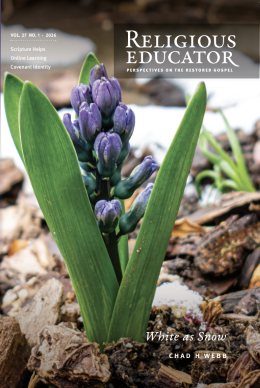
2026
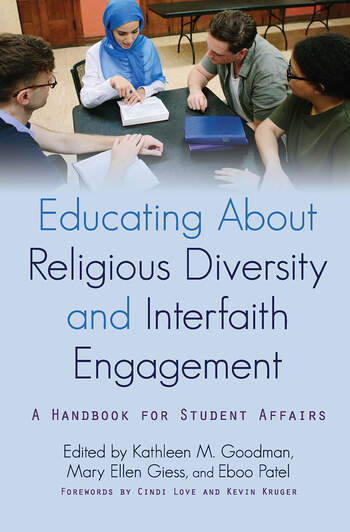
2019
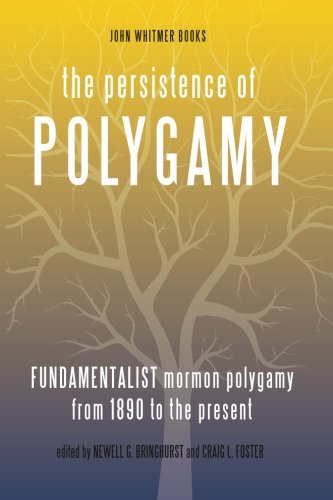
2015
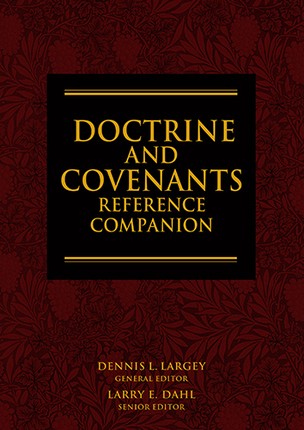
2012
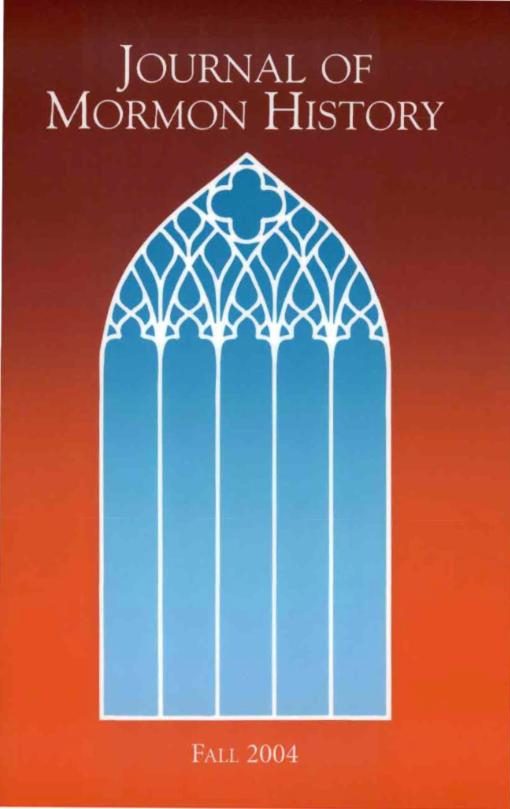
2004
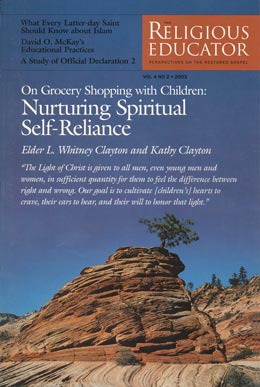
2003
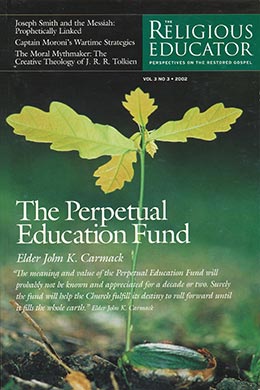
2002
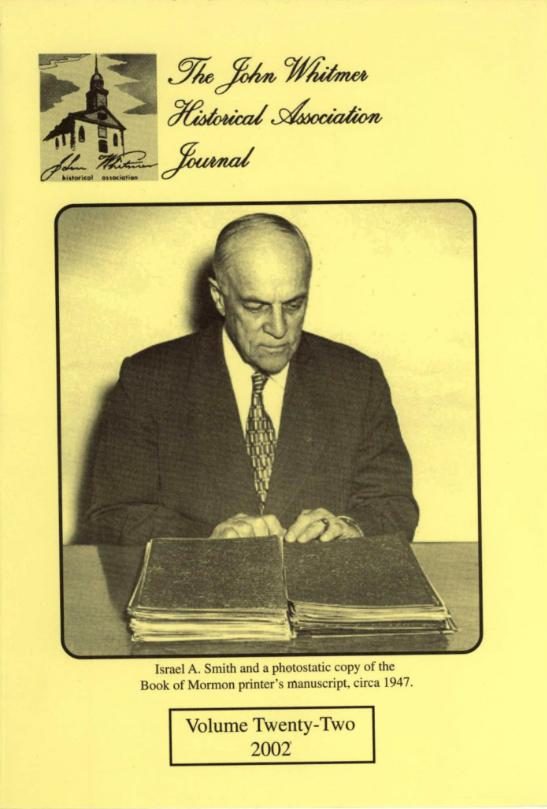
2002
2001
Rogers, E. P. (Comp.). (2026). Church Educational System research bibliography (October 2026 ed.). Zenodo. https://doi.org/10.5281/zenodo.23270606
Rogers, E. P., Langton, M., & Goldhardt, M. (2026). By study and also by faith: Online learning in Seminaries and Institutes of Religion. Religious Educator, 27(1), 101–128.
Rogers, E. P., & Christensen, I. (2025). The politics of belonging: Gender, family, and gatekeeping in LDS religious education. John Whitmer Historical Association Journal, 45(2), 113–130.
Brick, K. J., Nielsen, C., Jao, G., Rogers, E. P., & Monson, J. A. (2019). Understanding Christian students on campus. In K. M. Goodman, M. E. Giess, & E. Patel (Eds.), Educating about religious diversity and interfaith engagement: A handbook for student affairs. Stylus Publishing.
Rogers, E. P., & Roueche, K. (2015). Rulon C. Allred and the search for refuge. In N. G. Bringhurst & C. L. Foster (Eds.), The persistence of polygamy: A Mormon anthology (Vol. 3). John Whitmer Books.
Rogers, E. P. (2012). Conscience. In D. L. Largey (Ed.), Doctrine and Covenants reference companion. Deseret Book.
Rogers, E. P. (2012). Covet. In D. L. Largey (Ed.), Doctrine and Covenants reference companion. Deseret Book.
Wilder, L. K., Shepherd, T. L., McKee, F. M., Rogers, E. P., Heaton, E., & Sonntag, A. W. (2007). Teacher ratings of social skills across ethnic groups for learners with mild disabilities: Implications for teacher education. Curriculum and Teaching, 22(1), 47–66. https://doi.org/10.7459/ct/22.1.04
Rogers, E. P. (2005). Scale construction and halo effect in secondary student ratings of teacher performance [Doctoral dissertation, Brigham Young University]. BYU ScholarsArchive.
Rogers, E. P., & Glauser, R. S. (2004). The Kirtland Temple suit and the Utah church. Journal of Mormon History, 30(2), 81–97.
Rogers, E. P. (2003). “I have chalk in my blood!” An interview with Thomas L. Tyler. Religious Educator, 4(2), 95–113.
Rogers, E. P. (2002). “What a wonderful journey!” An interview with Stanley A. Peterson. Religious Educator, 3(3), 13–30.
Rogers, E. P. (2002). [Review of the book America’s religions: From their origins to the twenty-first century]. John Whitmer Historical Association Journal, 22, 128–129.
Rogers, E. P. (2002). The Quality of Residence Life Inventory scales: Rasch model analyses. Zenodo. https://doi.org/10.5281/zenodo.23273281
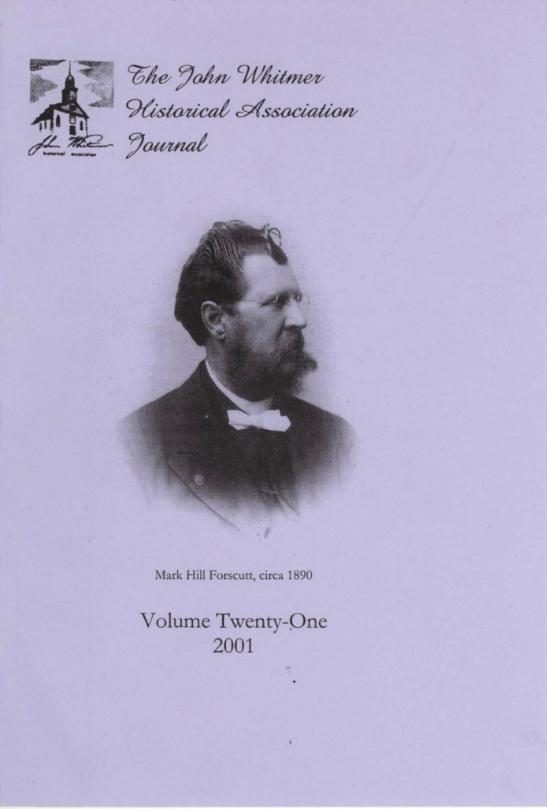
Rogers, E. P. (2001). Mark Hill Forscutt: Mormon missionary, Morrisite apostle, RLDS minister. John Whitmer Historical Association Journal, 21, 61–90.
Presentations
“‘I Am Anxious to See My Children’: Marriage, Authority, and Family Rupture at the Crossroads.” John Whitmer Historical Association, Council Bluffs, Iowa, September 25, 2026.
“Coding the Kingdom: The Digital Transformation of Seminaries and Institutes of Religion.” Mormon History Association, Las Vegas, Nevada, June 5, 2026. Handout.
“The Politics of Belonging: Gender, Family, and Gatekeeping in LDS Religious Education.” John Whitmer Historical Association, Independence, Missouri, September 20, 2025.
“Institutional Efforts to Measure Spiritual Outcomes: A CES-Wide Discussion.” Church Educational System (CES) Institutional Research Conference, May 9, 2025.
“From Morrisite to Josephite and Beyond.” Interview, Project Zion Podcast, Episode 616 (Cuppa Joe, Historic Sites Lecture Series), August 22, 2023.
“From Morrisite to Josephite and Beyond.” Community of Christ Historic Sites Foundation, 2023 Spring Lecture Series, May 28, 2023.
Interview, Project Zion Podcast, Episode 489 (Cuppa Joe, Historic Sites Foundation), June 21, 2022.
“Mark Hill Forscutt: Mormon Missionary, Morrisite Apostle, and RLDS Minister.” Community of Christ Historic Sites Foundation, 2022 Spring Lecture Series, April 14, 2022.
“Troubling Times: Origins and Development of Factions Forming within the Allred Polygamist Group.” John Whitmer Historical Association, Independence, Missouri, September 2015.
“The Morrisite War.” 60th Annual Utah State History Conference, Salt Lake City, Utah, September 2012.
“Prelude to Polygamy: The Early Life of Rulon Clark Allred.” Mormon History Association, St. George, Utah, May 2011.
“The Approval Process for Conducting Research Studies in Seminaries & Institutes of Religion.” Seminaries & Institutes of Religion Research Forum, Salt Lake City, Utah, December 2010.
“Research and Revelation.” Seminaries & Institutes of Religion Research Forum, Salt Lake City, Utah, June 2010.
“The Foundation of Mormon Fundamentalist Enclaves in Montana.” John Whitmer Historical Association, Burlington, Wisconsin, September 2008.
“Understanding the Mindset of Modern Polygamists.” John Whitmer Historical Association, Burlington, Wisconsin, September 2008.
“The FLDS Church and Mormon Fundamentalism.” John Whitmer Historical Association, Kirtland, Ohio, September 2007.
“The Morrisites and the Sociology of Religious Schism.” John Whitmer Historical Association, Independence, Missouri, September 2006.
“Why was The Church of Jesus Christ of Latter-day Saints Absent from the Kirtland Temple Litigation?” Mormon History Association, Kirtland, Ohio, May 2003.
“The Community of Christ.” 10th Annual Utah Pioneer Symposium, Salt Lake City, Utah, October 2003.
“Using Rasch Scaling Methods to Describe and Report Student Achievement of Intended Outcomes.” American Association of Higher Education and Accreditation (AAHEA) Assessment Conference, Denver, Colorado, June 2001.
“Aligning Alumni Survey Content with Institutional Goals.” American Association of Higher Education and Accreditation (AAHEA) Assessment Conference, Charlotte, North Carolina, June 2000.
“The Early English Missionary Labors of Mark Hill Forscutt: 1855–1860.” Mormon History Association, Aalborg, Denmark, July 2000.
“Mark Hill Forscutt: Mormon Missionary, Morrisite Apostle, RLDS Minister.” John Whitmer Historical Association, Excelsior Springs, Missouri, September 1999.
University Courses Taught
Religion 431 (Online)—LDS History 1805-1844 (BYU-Hawaii)
Religion 392—World Religions (BYU)
Religion 324-325—Doctrine and Covenants (BYU)
Religion 225 (Online)—Foundations of the Restoration (BYU-Hawaii)
Religion 200 (Online)—The Eternal Family (BYU-Hawaii)
German 101, 102, 201, 202—Beginning and Intermediate German Language (BYU, The University of Texas at Austin)
Institute of Religion Courses Taught
Religion 121-122—The Book of Mormon
Religion 150—The Gospel and the Productive Life
Religion 180—Principles of Leadership
Religion 211-212—New Testament
Religion 234—Preparing for a Celestial Marriage
Religion 235—Building an Eternal Marriage
Religion 324-325—Doctrine and Covenants
Religion 327—The Pearl of Great Price
Religion 333—Teachings of the Living Prophets
Religion 341-343—Latter-day Saint History
Religion 392—World Religions
Religion 430-431—Doctrines of the Gospel

